
Guide
What is a kWh and How Much Does It Cost?

Understanding your electricity usage is fundamental to managing your energy costs effectively.
A kilowatt-hour (kWh) is the unit of measurement that your electricity provider uses to determine how much electricity you’ve consumed. It’s not about the power you’re using at any given moment; rather, it’s about the total amount of energy you use over time.
For instance, if you run a 1000-watt appliance for one hour, you will have used 1 kWh of electricity.
The cost of a kWh varies depending on a range of factors including your energy supplier, tariff, and the region you’re in.
Your energy bill details the price you pay per kWh, which reflects not only the cost of generating this energy but also the expenses associated with its transmission, distribution, and various taxes and fees.
In the UK, the energy market is subject to fluctuation, meaning that kWh prices can change regularly. They are influenced by global markets, supply and demand, and government policies.
Being aware of how much a kWh costs you and which devices consume the most energy can help you make smarter decisions about your energy usage and reduce your monthly bills.
Understanding Kilowatt-Hours
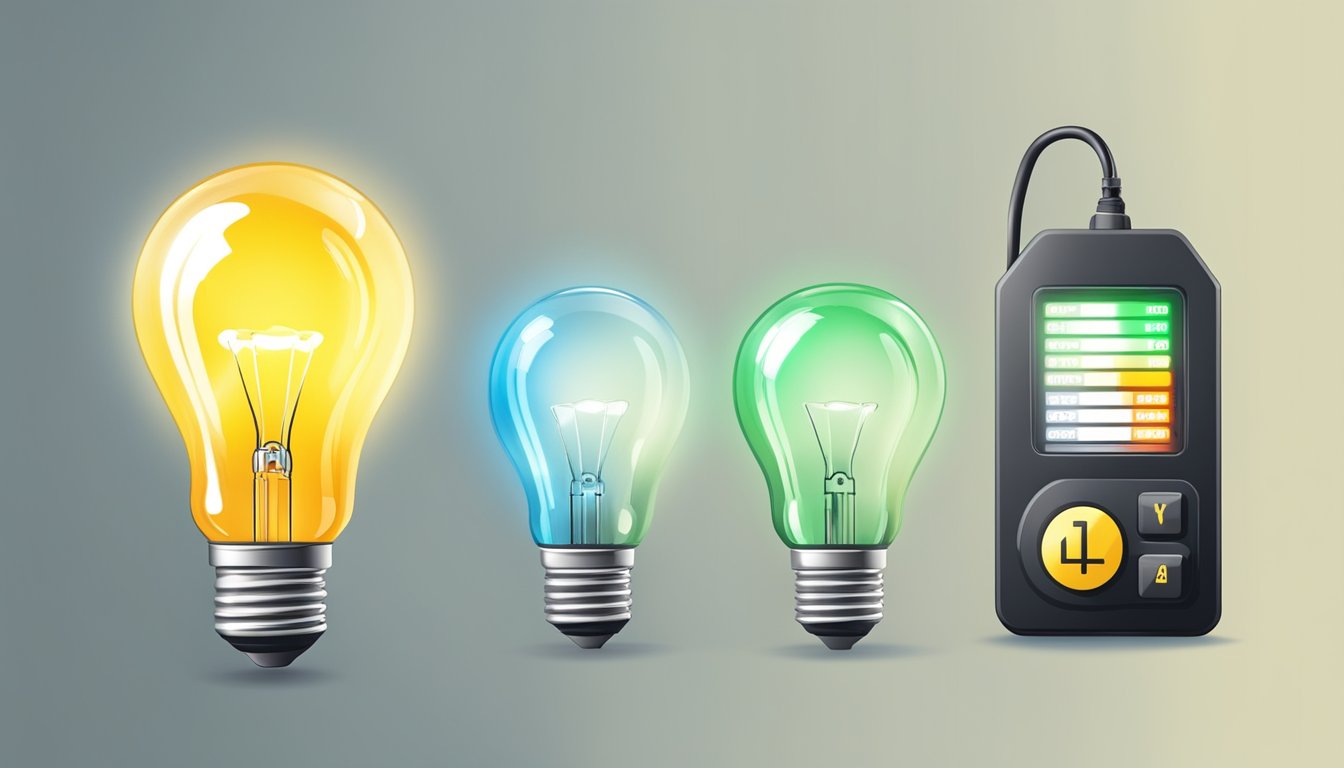
When managing home energy, understanding how kilowatt-hours (kWh) work is crucial. They’re integral for gauging electricity consumption and associated costs.
Defining the Kilowatt-Hour
A kilowatt-hour (kWh) is the unit of energy used to measure electricity. Not to be mistaken for a kilowatt per hour, a kWh represents the energy consumption of operating a 1,000-watt appliance for one hour. This unit is the standard measure used by energy suppliers to calculate your electricity bills.
Calculating Energy Usage
To calculate energy usage, take the power rating of an appliance (in kilowatts) and multiply it by the duration of use (in hours). For example, a 0.5-kW (500 watts) appliance running for 2 hours uses 1 kWh of energy (0.5 kW * 2 hours = 1 kWh).
Appliance Power Ratings and Consumption
Appliance power ratings are indicators of the electricity consumption. A higher rating reflects greater energy demand per hour. The energy usage of an appliance can be calculated by its wattage. For instance, a device rated at 2 kW will consume more electricity in one hour than a 500-watt appliance.
What can 1 kWh power?
The potential of 1 kWh varies between appliances based on their energy efficiency. It could power a 1,000-watt dishwasher for an hour or keep a 100-watt light bulb on for 10 hours. Understanding different power ratings helps conceptualise what 1 kWh can power, guiding energy usage and efficiency.
Factors Affecting Gas and Electricity Cost

When considering your energy bill, it’s essential to understand the various factors influencing gas and electricity costs. These can range from the tariff you’re on to the energy efficiency of your appliances.
What determines how much I pay for gas and electricity?
The cost you pay for gas and electricity is influenced by a host of factors:
- TariffsDifferent tariffs have varying rates; a fixed tariff might offer a set price per kWh whereas variable tariffs fluctuate with the market.
- Standing chargesThis daily fixed cost covers the maintenance of the national grid and energy supply.
- LocationPrices can vary by region due to distribution costs.
- Energy suppliersCompetition between suppliers affects pricing.
- Energy market fluctuationsWholesale costs of energy can change due to supply and demand, influencing retail prices.
- Government policiesLevies and taxes, such as VAT, can impact costs.
- Energy efficiencyHow much energy your home and appliances consume determines part of your cost.
- Carbon footprintHigher-efficiency ratings generally mean lower costs, benefiting both your wallet and the environment.
How much does it cost to use 1 kWh of gas and electricity?
Cost per kWh can be calculated using your energy bill; it is typically detailed in pence per kWh and varies based on the factors above.
Under the Ofgem energy price cap for 1 October to 31 December 2026, the Great Britain average rates for Direct Debit customers are:
- For gas7.97 pence per kWh, plus a daily standing charge of 29.68p.
- For electricity26.32 pence per kWh, plus a daily standing charge of 54.83p.
These averages include 5% VAT on gas. There is no VAT on household electricity from 1 October 2026 to 31 March 2027. Your own rates depend on your region and how you pay, and Ofgem is due to announce the cap for January to March 2027 in late November 2026.
Remember, the actual figures can differ widely depending on your chosen energy plan and provider.
How many Kilowatt hours should I use per year?
The average kWh usage per household varies:
- Annual electricity usageDepending on the size of your home and your lifestyle, the figure can range significantly. An energy-efficient household might use fewer kWh annually, thereby reducing the electricity bills.
- Annual gas usageSimilar to electricity, efficient heating systems and good insulation can decrease gas usage, impacting the gas cost on your energy bill.
As a benchmark, Ofgem's typical domestic consumption values, updated from 1 July 2026, put a medium-use home at 2,500 kWh of electricity and 9,500 kWh of gas a year (low use: 1,600 kWh and 6,000 kWh; high use: 3,800 kWh and 14,000 kWh).
Frequently Asked Questions
When discussing kWh and costs, it’s essential to understand the dynamics of electricity pricing and usage.
What determines the price of electricity per kilowatt-hour?
The price of electricity per kilowatt-hour (kWh) is influenced by various factors including fuel costs, power plant operations, transmission and distribution system maintenance, weather patterns, regulations, and market demand. Energy suppliers set their rates based on these parameters to cover costs and generate profits.
How do you calculate the cost of electricity for household appliances?
To calculate the cost for household appliances, multiply the power rating of the appliance (in kilowatts) by the number of hours you use it and then by the electricity cost per kWh. This gives you the total cost of running the appliance for the specified duration.
What factors influence the average domestic electricity rate per kWh?
Average domestic electricity rates per kWh vary depending on the operational costs of suppliers, environmental levies, VAT, and the mix of energy sources used for generation. Government policies and efficiency of the grid can also have an impact.
How can you calculate the cost of consuming a specific number of kWhs?
To calculate the cost of consuming a specific amount of kWhs, multiply the number of kWhs used by the rate charged by your energy supplier. This calculation gives you a direct insight into your energy expenditure.
What is the typical cost to generate one kWh of electricity from various sources?
The cost to generate one kWh of electricity varies significantly across different sources such as natural gas, coal, nuclear, and zero-carbons. Costs can fluctuate due to extraction, technology, and infrastructure required to harness and convert each energy source into electricity.
How does the pricing of kWh vary across different energy suppliers?
Pricing of kWh can vary across energy suppliers based on their purchasing strategies, customer service, and marketing. Suppliers’ overheads also play a role in this variation.
Suppliers may offer different tariffs and pricing plans. These are influenced by competitive market dynamics.